Skip to content

The tools for changing a tap, and the one with no substitute

The bathroom aisle sells more tools than a bathroom needs. Between two isolating valves, almost every job on this site is done with three, and the interesting one is the tool that exists for a geometry nothing else reaches.

Three tools and a cartridge, and the reasons are geometric rather than about quality.

Water pump pliers, for everything round

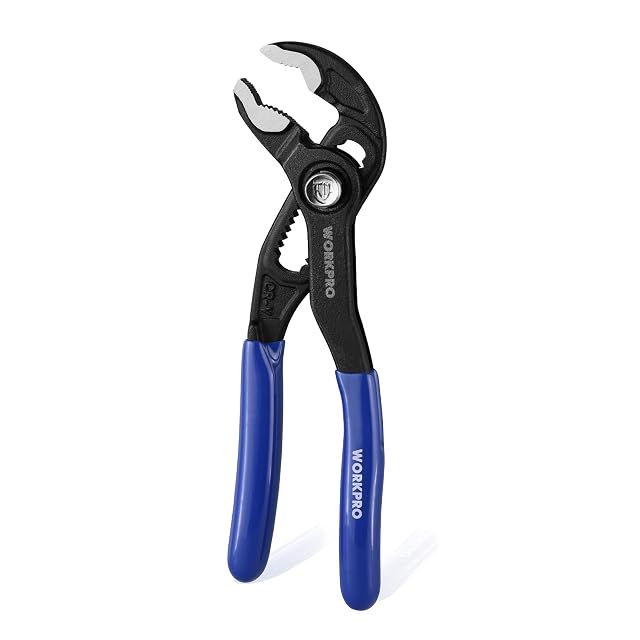
The WORKPRO pliers cover most nuts from a trap to a shower hose. Jaw capacity is the specification: a 32 mm trap nut and a 1/2 inch valve are what they have to open around.

A smooth-jaw option, for what will be seen

The VORTA plier wrench is the answer to the chrome problem — parallel smooth jaws that grip a nut without printing a pattern into it. On visible fittings this is not a luxury.

A set, if the sizes are unknown

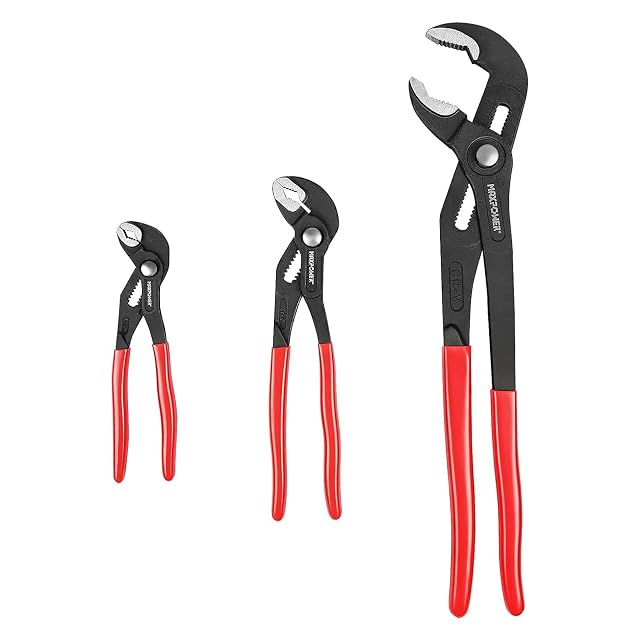
The MAXPOWER set covers a range rather than a size, which is the sensible purchase when the job has not been opened yet and the nut could be anything.

And the consumable that finishes the job

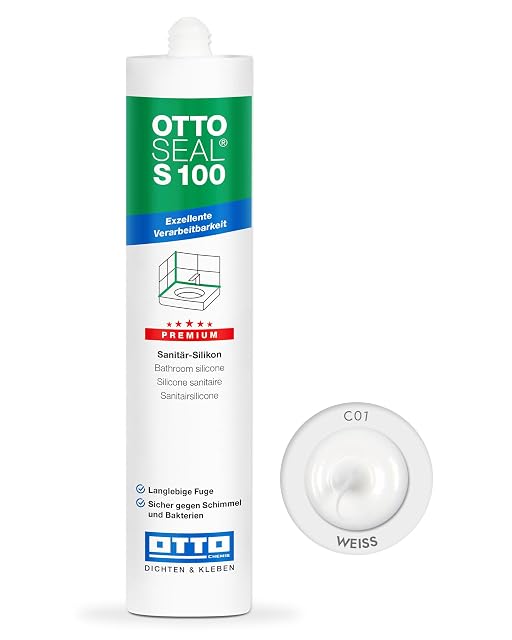
The OTTOSEAL sanitary silicone, because a tap change usually ends at a joint. Sanitary grade carries a fungicide meant for permanently damp joints; ordinary construction silicone goes black at the edges within a season.

The rule that matters more than the tools

Nothing bonds to a joint that has had silicone in it — including new silicone. Removing the old bead and its residue completely is the half of the job that decides whether the new one holds.

What we recommend, and why

  1. WORKPRO 127 mm Cr-V water pump pliers, 25 mm jaw, push-button adjustment

    Water pump pliers · 127 mm · 25 mm maximum jaw opening — stated · push-button adjustment · Cr-V steel, heat treated · all-purpose jaws

    A pocket-sized pliers with a published jaw capacity — the one that actually fits inside a cabinet under a basin.

    Best for: Small work in confined space — an aerator, a compression nut, a valve spindle inside a cupboard.

    ≈ £10 / 12 €
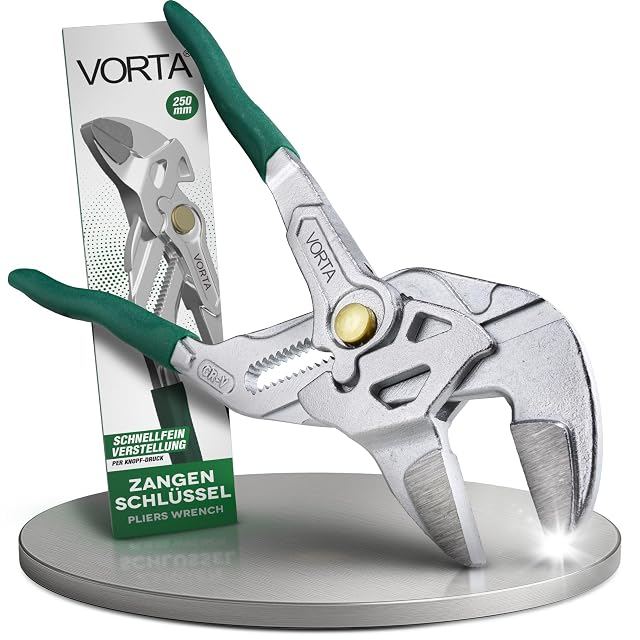
  2. VORTA 250 mm pliers wrench, 52 mm jaw, hardened carbon steel, 390 g

    Water pump pliers · 250 mm · 52 mm jaw capacity — stated · ratchet fine adjustment · toothed jaws · hardened carbon steel · 390 g · CE tested

    The one pliers here that publishes a jaw big enough for the nuts a bathroom actually has — 52 mm.

    Best for: The actual bathroom jobs — a tap back nut, a trap connector, a seized angle valve — where 25 mm is not enough.

    ≈ £32 / 25 €

  3. MAXPOWER three-piece Cr-V pliers set, 180/240/420 mm, 30/40/92 mm jaws

    Pliers set · 180 / 240 / 420 mm · jaw capacities 30 / 40 / 92 mm — all stated · push-button fine adjustment at the workpiece · Cr-V steel, black phosphated · through-going joint

    The complete answer: three lengths, three jaw capacities, all published, with the through-going joint on every one.

    Best for: A house where the plumbing gets touched more than once, and every size should already be in the drawer.

    ≈ $41 / £48 / 42 €

  4. OTTOSEAL S 100 premium sanitary silicone, acetoxy, 84 colours

    Sanitary silicone · 300 ml · one-component acetoxy — stated · fungicidal and bacteriostatic · 50 % movement capability · EMICODE EC 1 Plus · 84 colours

    The best-specified sealant in this catalogue: a named chemistry, a movement figure, an emissions class and a colour range that will match your grout.

    Best for: A joint that has to match coloured grout, or one that will move — a bath that fills and empties every day.

    ≈ £12 / 9 €

Questions people actually ask

Which tool has no substitute?

A basin wrench. The back nut that holds a tap down sits where no straight spanner reaches and no hand fits, and the tool exists for exactly that geometry.

Why do serrated jaws matter?

They mark chrome permanently, and the scratches do not polish out. A cloth around a visible nut costs nothing, and smooth-jaw tools exist for the same reason.

How tight should a joint be?

Hand tight plus a small amount, on anything that seals on a washer or an O-ring. Overtightening splits plastic nuts and crushes washers, and a crushed washer leaks worse than a loose one.

What is the essential tool?

A basin wrench. The nuts behind a basin are unreachable with anything else, and that is what stops most attempts.

Why do I need two spanners?

To hold one fitting while turning another. Turning against nothing twists the pipework behind the wall.

The nut will not move. What now?

Penetrating oil and time, not more force. Forcing it shears the fitting and turns a tap change into a plumbing repair.

Should I fit isolating valves?

If there are none, yes. They cost very little and make every future job on that tap straightforward.

How tight should the new fittings be?

Firm rather than tight. Overtightening cracks plastic nuts and deforms compression joints, which then leak.

When should I stop and call someone?

When pipework is corroded, moves when handled, or does not match what you bought. Stopping there is the cheap outcome.

The tool we use ourselves

Chosen your fitting? Now buy it at the right price.

Taps, shower systems and mirror cabinets swing by fifty euros or more across the year, and the biggest "discounts" often land at prices the same model sold for six weeks earlier. UniverTrack tracks the real price history across retailers, spots fake reductions, and alerts you when it is genuinely the moment to buy.

Real price historyBuy-now alertsAI buying assistant
Try free for 14 days →
No commitment · Cancel in one click · 5 languages