Water and limescale
A bathroom in hard water
Hard water does not damage a bathroom; it blocks it. Aerators clog, nozzle faces spray sideways, cartridges seize and dark finishes display a white film that the usual cleaner is forbidden to touch. Every choice here is made on whether the part can be cleaned or replaced.
By Jean-Benoit Buisson
Five choices, each made on how the part behaves once deposit starts. Prices are Amazon.com, read on October 29, 2026.
Treatment at the main, sized to your hardness
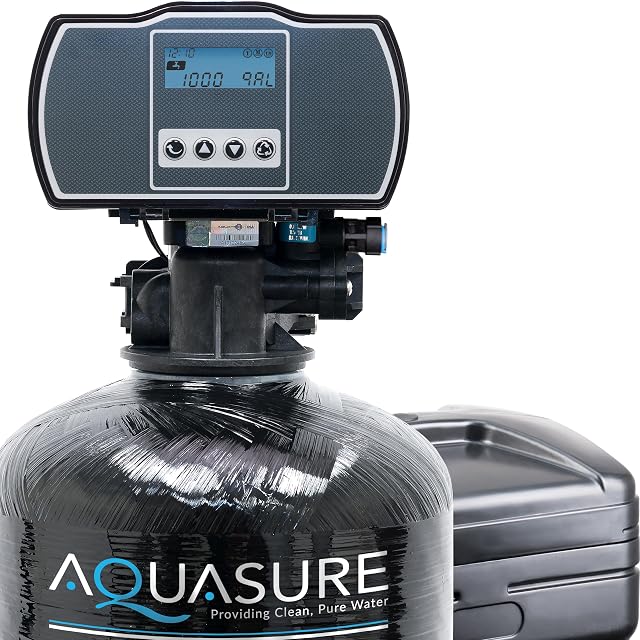
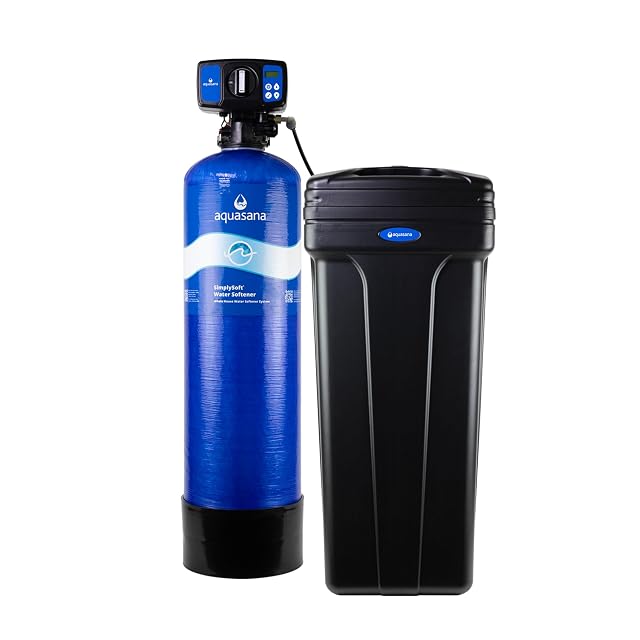
A whole-house softener is the only thing on this page that stops scale rather than managing it. The Aquasure Harmony 64,000-grain is the lowest price per grain of capacity on this site, $11.72 per 1,000 grains at about $750, with a sediment pre-filter in front of the resin. The Aquasana SimplySoft 40K costs more per grain, about $749 for 40,000, and is one of only two softeners here certified to NSF/ANSI 44, the American standard for softeners.
Read either against your own hardness, in grains per gallon from your utility’s water quality report: the same unit regenerates twice as often on water twice as hard. And read the running cost as salt, not as the purchase price.
A head whose nozzles can be rubbed clean
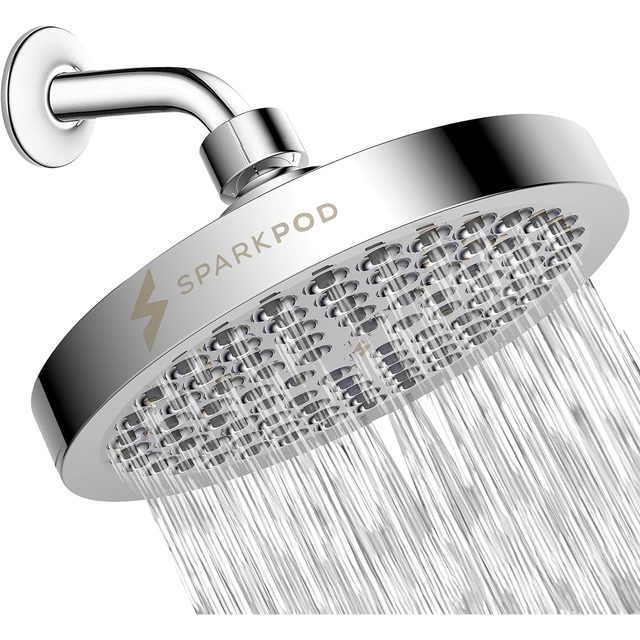
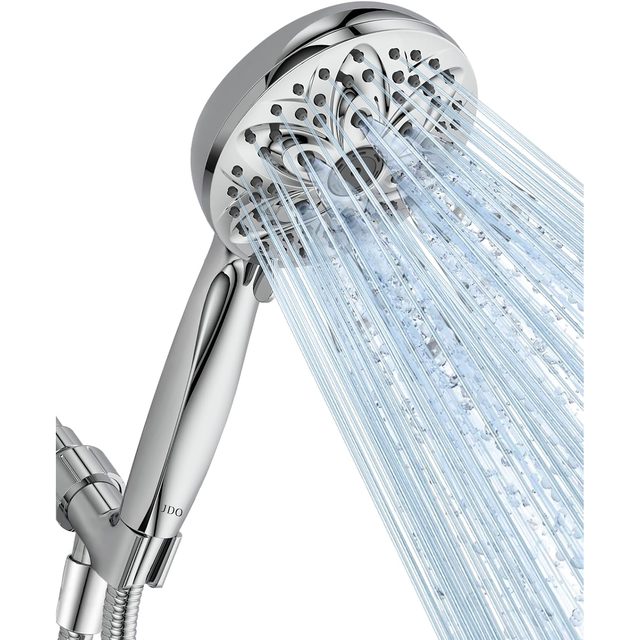
In hard water a shower head fails by spraying sideways as deposit builds in the holes. The SparkPod 6-inch rain head has 90 rubber jets that wipe clear with a finger, and ships at 1.8 gpm, the California limit. The JDO handheld has 54 silicone nozzles for about $20. Rubbing a soft nozzle is the maintenance that works; soaking a drilled metal face in acid is what a colored finish cannot take.
Filtration at the faucet, for taste rather than scale
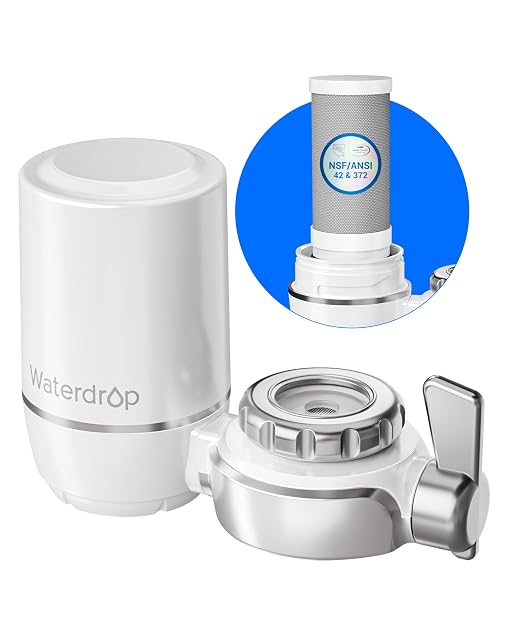
The Waterdrop FC-01 is certified to NSF/ANSI 42 for chlorine, taste and odor, and 372 for lead-free materials. It does not soften water. It is on this list because people buy faucet filters expecting the other thing, and it is worth saying which is which.
What changes nothing
Wiping a faucet and squeegeeing the shower glass after use changes more than any of the above, and costs nothing. Scale forms where water evaporates. It is the free half of living with hard water, and it is why this page is not only a shopping list.
Prices quoted in this text were read on October 29, 2026. The live price is at the top of the page.
The questions we get
Where do I find my water hardness?
Your water utility publishes it in its annual water quality report, in grains per gallon or ppm of calcium carbonate. Every softener capacity is quoted against a hardness figure, so the numbers cannot be compared without yours.
Does a softener make water better to drink?
No, and this site does not make that claim. It treats limescale; softened water carries more sodium rather than less, and drinking water quality is a matter for your supplier.
Can I descale a black or brushed faucet?
Check what the manufacturer allows. Most state that acidic descalers must not be used on colored or coated finishes, and the damage is not reversible. Wiping after use is the maintenance that actually works on those.
What actually helps most?
Drying surfaces after use. Scale forms where water evaporates, so removing the water removes the cause.
Why has my shower weakened?
Scale inside the head, almost certainly. Descaling restores it, and doing the hose at the same time keeps it restored.
Can I use descaler on everything?
No. Some finishes and natural stone are permanently damaged. Check what the manufacturer permits first.
Is a water softener worth it?
It is the only permanent answer, with an installation cost and ongoing consumables. In very hard water many people conclude it is.
How do I stop marks on the glass?
A squeegee after each shower. It takes seconds and prevents the marks rather than fighting them later.
What about scratched glass?
It holds marks permanently, which is why abrasives make the problem worse rather than better.