Fit and dimensions
A kitchen tap under a window that opens inwards
A window that opens inwards over the sink is one of the few constraints in this catalogue that genuinely removes most of a shelf. The tap has to duck under a sash that sweeps lower than the frame suggests, and that single measurement decides everything else.
By Jean-Benoit Buisson
One measurement, taken with the window open, and then a short shelf.
The measurement
Worktop to the lowest point of the sash, with the window swung fully in. Write it down; it is the ceiling every tap on this page has to fit under.
The three folding options
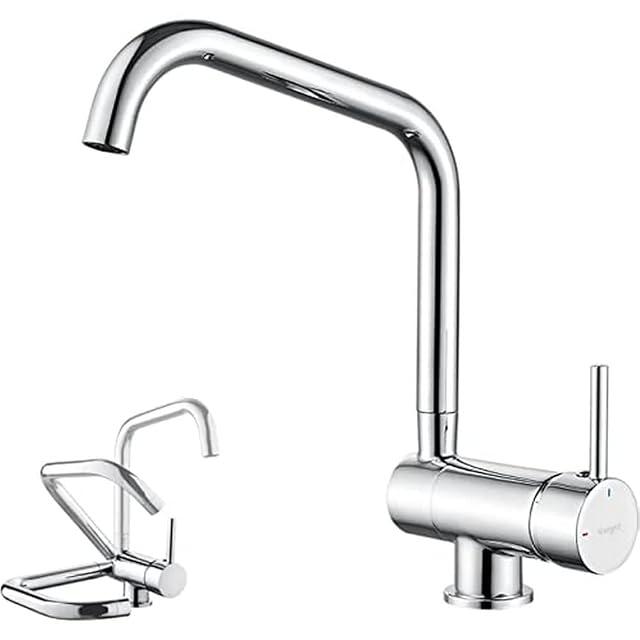
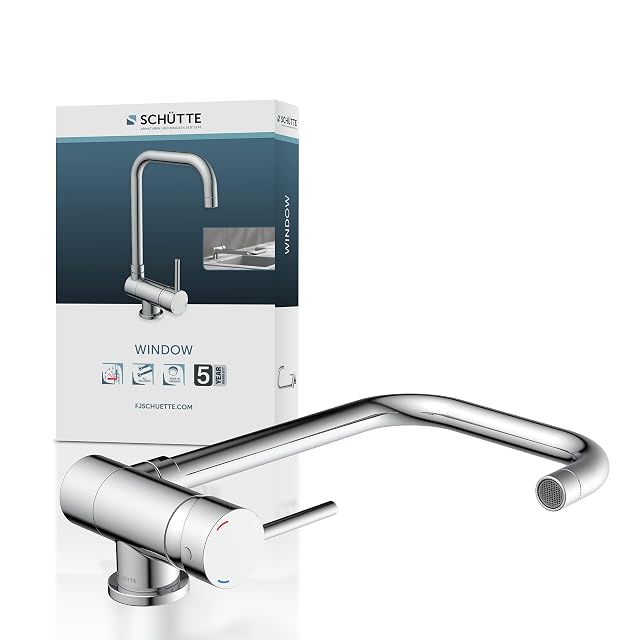
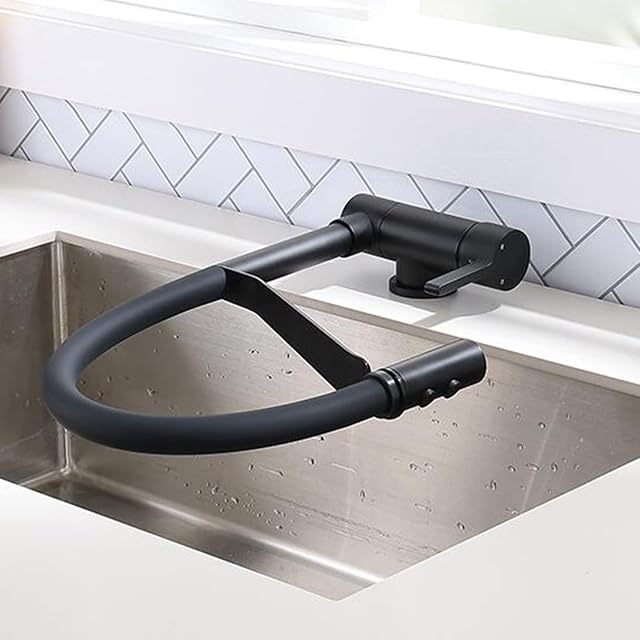
The Ibergrif, the SCHÜTTE and the ZPSPZ all fold, and they differ in how far they drop and in which direction. Read the folded height and the fold direction together — a tap that folds low but backwards into a tiled return is no use.
The SCHÜTTE range is the one whose listings name the mechanism rather than the finish, which on this shelf is the more useful habit.
The option that is not a folding tap
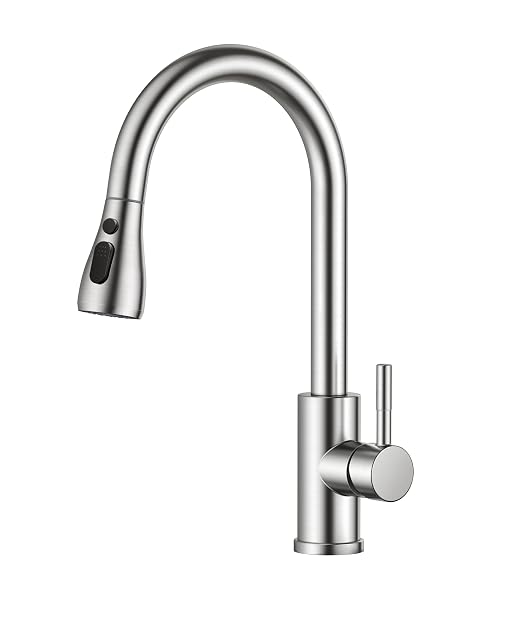
The FORIOUS pull-out is here deliberately. If the window opens outwards, or if there is no window at all, a folding hinge is a wear part bought for no reason — and a pull-out spray is the kitchen feature people actually use daily.
What to check on any of them
Tap hole diameter, tail length down to the isolating valves, and — on the pull-out — whether the space under your sink is clear enough for the counterweight to travel. A full cupboard is the commonest reason a pull-out stops retracting.
Questions people actually ask
How do I measure the height I have?
With the window actually open, not closed. Measure from the worktop to the lowest point of the sash as it swings past — that arc is what the tap has to clear, and it is lower than the frame.
Which way should it fold?
Backwards against the wall is usual; sideways exists. One of the two will foul your window, and the listing states which the tap does.
Are folding taps less reliable?
Some fold at a hinge that carries water, with a seal that is a wear part; others fold above the waterway, which is one less thing to leak. Makers rarely say which, and when they do it is worth noting.
How do I measure the clearance?
With the window open, following the path of the opening sash. Measuring against a closed window is the classic error here.
Are folding taps a good solution?
They are the purpose-built answer, and they add a moving joint that eventually needs attention. Keeping it exercised and dry is most of the care.
Can I keep a tall spout?
Only if it clears the open window, which is rare. Otherwise a low profile is the price of an opening window.
Does reach matter too?
Very much on a wide sink. A short spout puts water on the edge of the bowl rather than in it.
Can I fit any tap in the existing hole?
Hole diameter and position constrain the choice, and changing them means changing the sink or worktop.
What if I never open the window?
Then a taller tap is possible, but make that a deliberate decision rather than discovering it later.