Buying
Choosing a basin tap, by what the money actually buys
Basin taps are the family where price and result are most weakly related, because so much of what is sold is a coating over the same mechanism. This list runs from the entry of the shelf upward, and each step says what the extra money is buying rather than what it looks like.
By Jean-Benoit Buisson
The order here is by price, and every step names what it buys.
Where the shelf starts
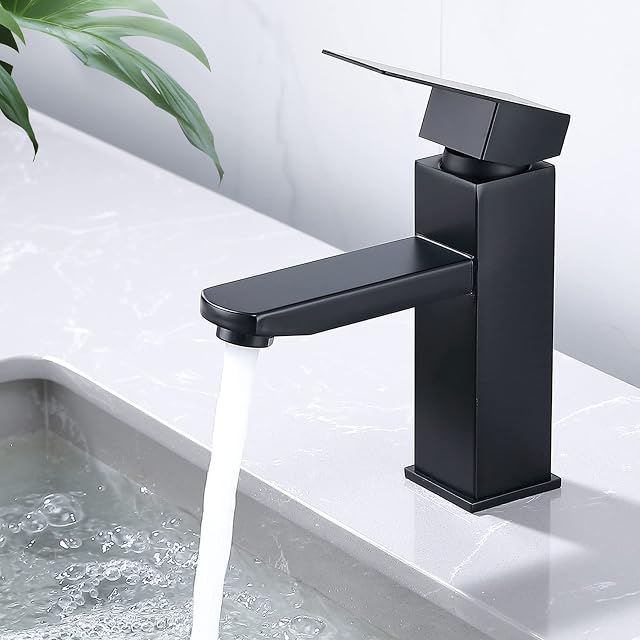
The HOMELODY sits at the price where listings stop publishing figures. That is the honest thing to know about the entry tier: the question is not whether it works on day one, it is which numbers you were given.
The step that buys threads you can read
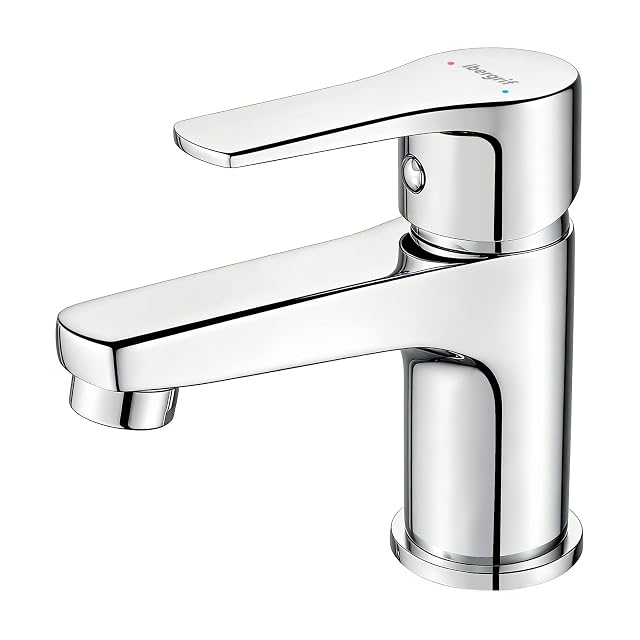
The Ibergrif is from a range whose valve and connection listings state their threads, and that carries over. A tap you can order confidently is worth a few euros over one you have to guess at.
The middle, where the body starts being named
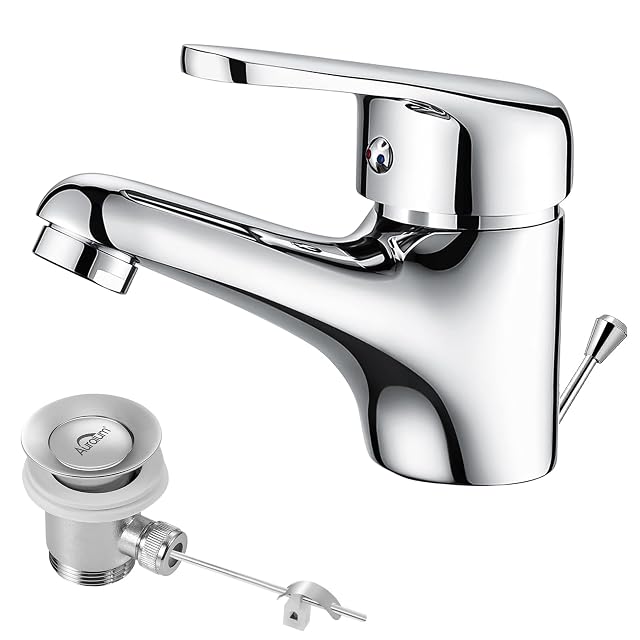
The Auralum sits where brass bodies and standard cartridges become common rather than occasional. This is the part of the shelf where the difference between two taps is real and small.
Where the specification becomes a document
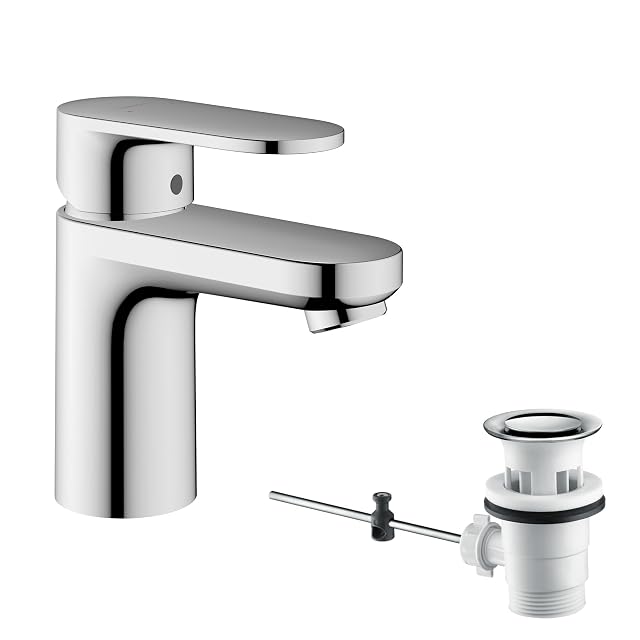
The hansgrohe publishes the condition behind its numbers — a flow figure with the pressure it was measured at — and sells the parts that keep it working. That is what the step up buys, and it is not visible in a photograph.
The design end
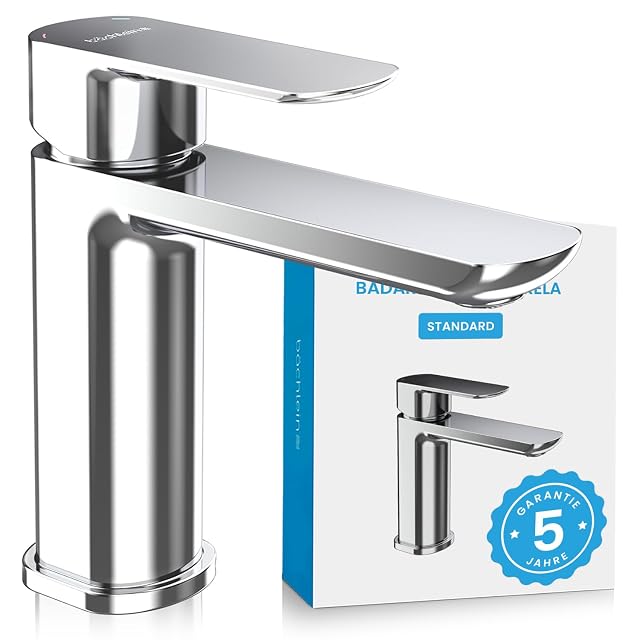
The Bächlein is from a range better known for the parts under the basin, and its taps are specified the same way. At the top of this list you are buying a considered object rather than more mechanism.
What none of them fix
Weak pressure. If the complaint is flow rather than looks, the aerator and the supply are the pages to read, and a new tap changes nothing.
Questions people actually ask
Is a more expensive tap more reliable?
Only where the money went into the cartridge and the body. A standard 35 or 40 mm ceramic disc cartridge is a spare part you can still buy in ten years; a proprietary insert is not, and that is the single biggest difference between a tap you keep and one you replace.
Does the finish affect durability?
Chrome, matt black and brushed are all coatings. What differs is how they show limescale and what may be used to clean them — most makers forbid acidic descalers on coloured finishes, and that instruction is on the product.
What do I need to measure first?
Tap hole diameter — 35 mm on almost everything modern — and the distance from that hole down to your isolating valves, because the tails have to reach. Both take a minute and both are cheaper to check than to discover.
What decides which taps fit?
The hole count and spacing on your basin. Nothing adapts across formats, so measure that before looking at anything else.
What actually wears out?
The cartridge, almost always. A tap that drips or stiffens usually needs a cartridge rather than replacing.
Does spout height matter?
Considerably. Too low and you cannot use the basin comfortably; too tall and it splashes. Match it to the basin.
Will any tap work on low pressure?
No. Some state a minimum working pressure, and on a gravity system that is worth checking before buying.
Why has the flow gone weak?
Usually a scaled aerator. Unscrewing and descaling it takes minutes and restores the flow completely.
Should I reuse the old hoses?
No. Flexible hoses are consumables and a common cause of leaks. Fit new ones with the new tap.