Flow and pressure
A shower that suits the pressure you actually have
Most disappointment in the shower family is the same arithmetic: coverage is flow divided by area, and area grows with the square of the diameter. A 30 cm head spreads the same litres more than twice as thinly as a 20 cm one. This list is what to buy when the supply is the limit.
By Jean-Benoit Buisson
Four purchases, chosen so that none of them asks for pressure you have not got.
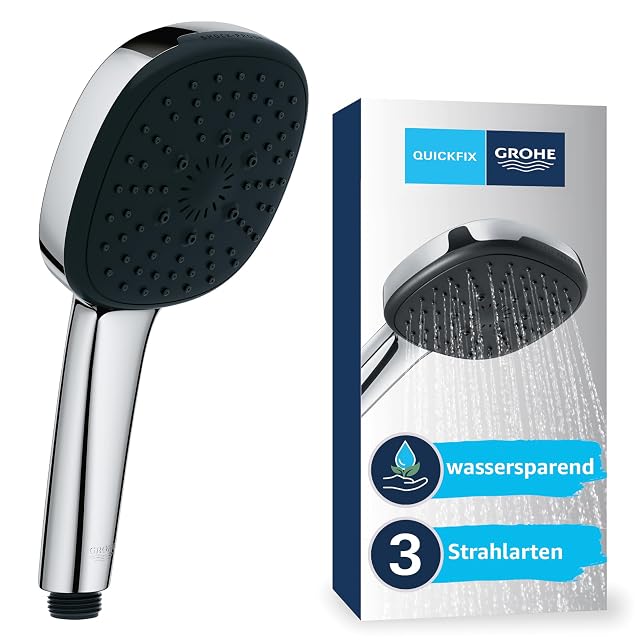
1. A hand shower with usable modes at low flow
The GROHE head is the piece you hold, and on a weak supply it is where the improvement is. Concentrated patterns keep their feel at low flow where a wide rain pattern turns into drizzle.
Before deciding a new head is weak, look in the inlet for the moulded flow restrictor and read whether it is designed to come out.
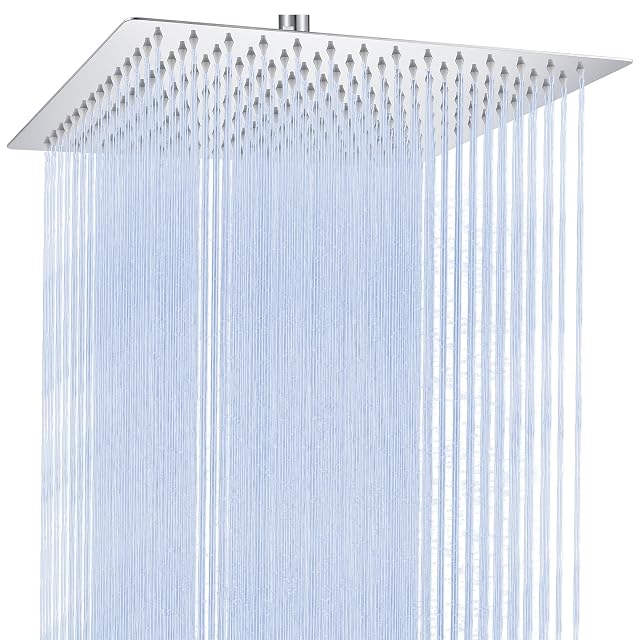
2. A modest fixed head, not a large one
The Auralum rain head is deliberately at the small end. This is the counter-intuitive purchase of the list: on 1.5 bar, a 20 cm face feels like a shower and a 30 cm face feels like standing in mist.
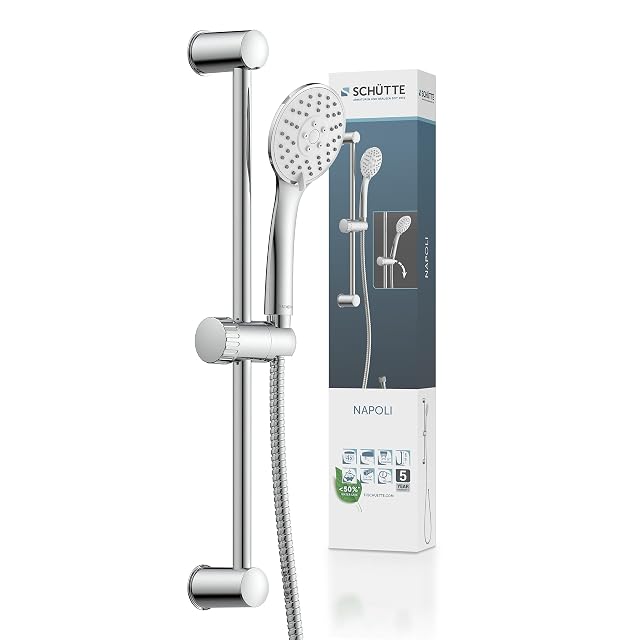
3. A rail set rather than a column
The SCHÜTTE rail set puts the head where you want it without replacing the mixer, which is the expensive part and the part most likely to be pressure-sensitive. Measure your existing bracket centres before ordering.
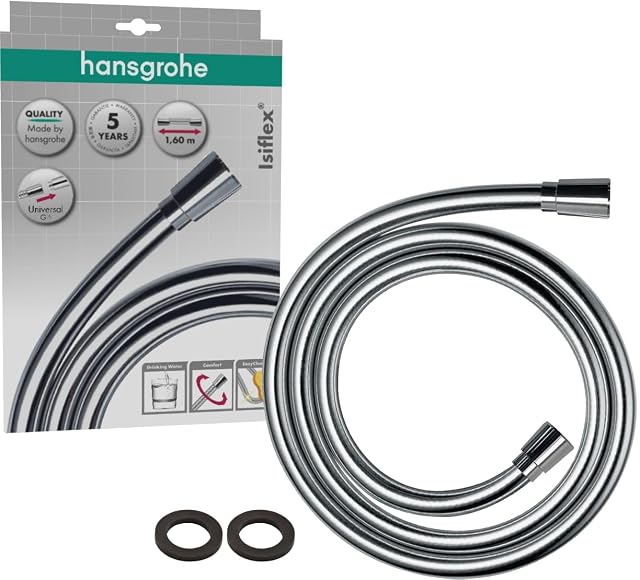
4. A hose that is not the restriction
The hansgrohe hose has an anti-twist swivel, and a hose that has not kinked is a hose that is not costing you flow. Check that cone seals are supplied.
What to avoid entirely on a weak supply
A large ceiling-mounted rain head, a body-jet column, and any thermostatic mixer whose stated minimum operating pressure is above what you have. All three are good products asked to do something the supply cannot support.
Questions people actually ask
How do I find out my pressure?
A gauge that screws onto a tap or a washing-machine valve reads it directly and costs very little. Your supplier publishes a network figure too, though what arrives at an upstairs shower depends on your own pipework.
Will a thermostatic mixer help a weak shower?
No. It stabilises temperature and does nothing for flow — and below the minimum pressure the maker states, it regulates badly rather than failing safely. On a weak supply it changes the problem rather than solving it.
Is a pump the answer?
It can be, and it is a plumbing decision rather than a shopping one: what may be fitted depends on your supply type and on your national rules. This site stops at what a fitting needs and points at those rules.
Why is my shower weak?
If it weakened gradually, almost certainly scale. If it dropped suddenly, look for a blockage or a partly closed valve.
Will a rain head help?
On low pressure it usually makes things worse, spreading limited flow across many holes. Concentration is what weak pressure needs.
What is a low-pressure shower head?
One designed to work with limited pressure, typically by concentrating flow. Many heads state a minimum pressure they need.
Will descaling really help?
It is the most likely fix and the cheapest. Scale builds inside the head and restricts flow long before it is visible.
Do I need a pump?
Only if the system pressure itself is the limit and everything else has been ruled out. It is a plumbing job, not a purchase.
Why did descaling only help briefly?
The hose and any inline filter scale up too. Cleaning only the head leaves the restriction in place.