The bottom line The best-documented seat in the hub and the one most likely to fit an awkward pan. Its antibacterial figure is a material test, and this page treats it as one.
What you are getting
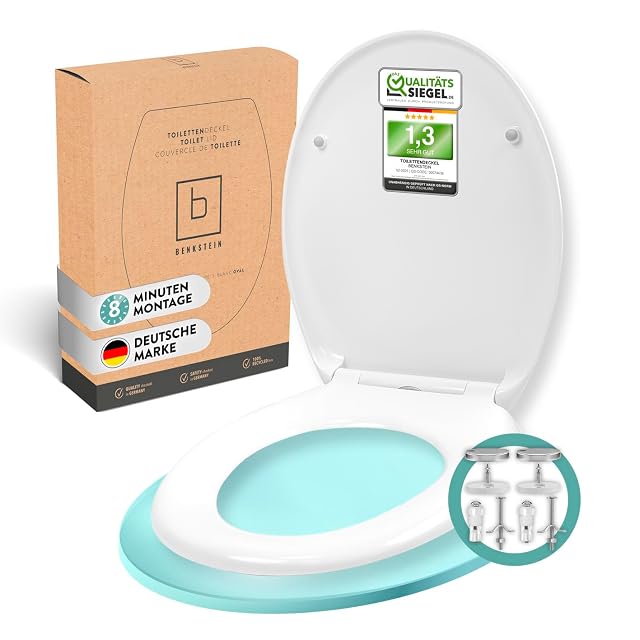
A white oval seat in antibacterial urea duroplast, with two fixing systems, pre-assembled tilt anchors, stainless fixings, stick-on wall buffers, double soft-close, and 250 kg tested to DIN 19516.
Two fixing systems is the practical differentiator
The commonest reason a seat cannot be fitted is not size — it is that the pan’s fixing holes are closed from below, so nothing can be reached with a wing nut. Wall-hung pans and many modern back-to-wall pans are like this.
This seat ships with both a conventional fixing and a top-tightening tilt anchor. One box, either pan.
250 kg, to a named standard
The highest here, and cited to DIN 19516 rather than asserted. Two other seats in this hub cite the same standard at 150 kg; two publish a bare number.
What the antibacterial figure means
“99.99 % fewer bacteria, certified to ISO 22196.”
That is a real standard and a real test: bacteria applied to a material surface under laboratory conditions, counted after a set time. It describes the plastic.
It does not describe your bathroom, which is decided by what gets cleaned and how often. This page reports the standard and stops there.
What is still absent
The dimensions. As with almost every seat on this shelf, measure your pan first.
Availability
On sale at around 40 € on the German Amazon store at the time of checking.
Listed but with no offer on the American, British, French, Italian and Spanish Amazon stores — the reference exists there and nobody is currently selling it.
Prices and availability are what Keepa reported on the date this page was updated; both move.
Prices quoted in this text were read on 5 September 2026. The live price is at the top of the page.
What we like, and what we don't
Strengths
250 kg to DIN 19516 — the highest tested figure in this hub by a hundred kilograms
Two fixing systems in one box, including one for pans whose fixing holes are closed from below
Stated Made in EU, with stainless fixings and stick-on wall buffers supplied
Compromises
No dimensions published, on the seat that otherwise documents itself best
The 99.99 % figure is a laboratory result on the material surface, not a statement about the bathroom
Plug-fixing removal rather than a one-button quick release
Specifications
Length
Not stated by the maker
Width
Not stated by the maker
Hinge hole spacing
Not stated by the maker
Material
Antibacterial urea duroplast, stated to reduce bacteria by 99.99 % and certified to ISO 22196
Hinge type and fixing
Top fixing with pre-assembled tilt anchors and stainless fixings, plus an alternative fixing for closed holes — stated
Quick-release
Removable via a plug fixing — stated
Stated load capacity
250 kg, tested to DIN 19516 — stated
Amazon reference
DE B07QTWQLT9 · US B07QTWQLT9 · GB B07X6TYB39 · FR B07X6TYB39 · IT B07X6TYB39 · ES B07X6TYB39
EAN
4251280306030
Questions people actually ask
What is an "alternative fixing for closed holes"?
Some pans — especially wall-hung ones — have fixing holes you cannot reach from underneath, so a conventional bolt and wing nut is impossible. Tilt anchors expand inside the hole and tighten from above. Supplying both methods in one box means the seat fits either kind of pan.
What does the ISO 22196 certification actually say?
It is a laboratory test of how a material surface performs against bacteria applied to it under controlled conditions. The 99.99 % figure belongs to that test. It is a real, named standard — and it is a statement about the plastic, not about the hygiene of your bathroom, which is decided by cleaning.
Toilet seat · urea duroplast 2.0, antibacterial and UV-resistant · 25° fast-close · two mounting systems · quick-release · 150 kg to DIN 19516 · 120 000 cycles
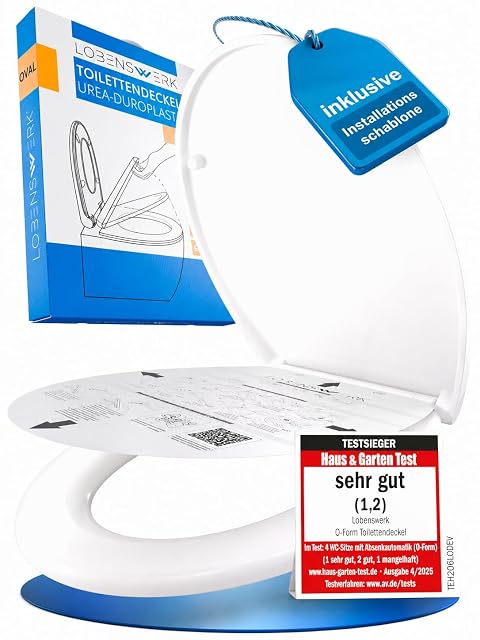
A seat that publishes a soft-close life of 120 000 cycles — eight times what its nearest rival states — with a template, a video and two mounting systems.
Best for: A busy household where the damper will be worked hard, and a pan whose fixing type is not yet known.