The bottom line The seat specified where it matters — hinges and a cited standard. Its dimensions are as absent as everyone else's.
What you are getting
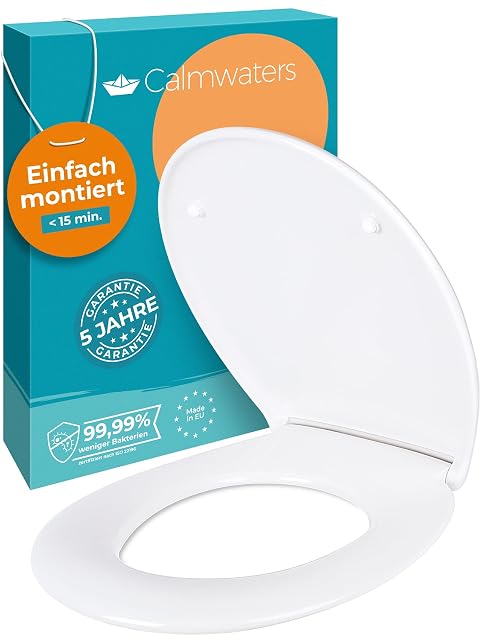
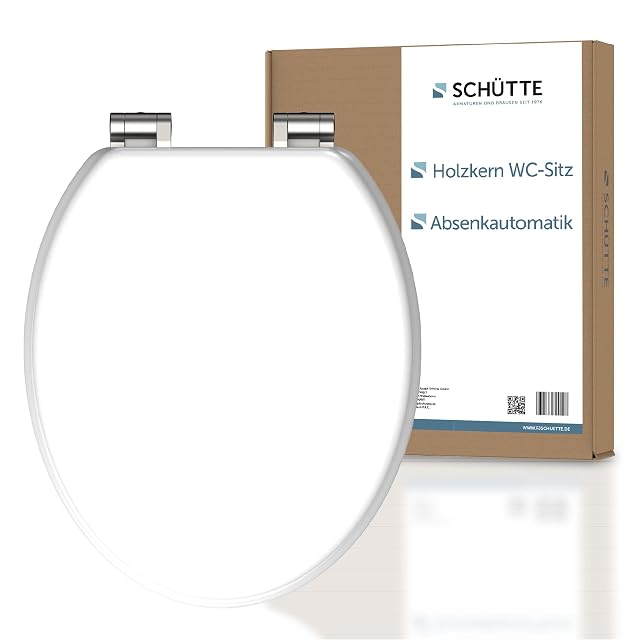
A white oval seat in urea duroplast, stated antibacterial and colourfast, with stainless steel hinges, top fixing with an ordinary screwdriver, quick-release, floating rear buffers and 150 kg tested to DIN 19516.
The hinges are the review
Everything else on a seat is a moulding. The hinges are metal parts living in a damp recess, holding the seat square, and needing to come undone one day.
Plated steel seizes into the porcelain. Stainless does not. That single word is worth more than every “premium” on the shelf.
A number with a standard attached
150 kg to DIN 19516. Compare it with the seats here that publish 150 kg and nothing else: same figure, different weight of evidence.
The floating buffers
The rear buffers sit slightly clear and settle as you sit down. It gives a small amount of give, and it stops the ring grinding grit into the porcelain glaze every time.
What is missing
Length, width, hinge hole spacing. Measure your pan before ordering — that advice applies to almost this entire shelf.
Availability
On sale from 30 € to 45 € on the German, French and Spanish Amazon stores at the time of checking.
Also on sale on the British Amazon store, in the local currency: the range above is measured on the euro stores only.
The Italian Amazon listing is priced above 1.6× the cheapest store, which is normally a reshipping offer rather than a local price; it is left out of the range above.
Listed but with no offer on the American Amazon store — the reference exists there and nobody is currently selling it.
Prices and availability are what Keepa reported on the date this page was updated; both move.
Prices quoted in this text were read on 5 September 2026. The live price is at the top of the page.
What we like, and what we don't
Strengths
Names the hinges as stainless steel — the component that rusts and seizes on a cheap seat
Cites DIN 19516 behind the 150 kg figure rather than giving a bare number
Rear buffers that float clear and settle as you sit, stated, which softens the seat noticeably
Compromises
No dimensions of any kind published
The antibacterial claim names no test standard, unlike another seat in this hub
Top fixing only, with no alternative for a pan whose holes are closed underneath
Specifications
Length
Not stated by the maker
Width
Not stated by the maker
Hinge hole spacing
Not stated by the maker
Material
Urea duroplast, stated as antibacterial and colourfast
Hinge type and fixing
Stainless steel hinges, fitted from above with an ordinary screwdriver — stated
Quick-release
Yes — the lid releases from the ring at a button, stated
Stated load capacity
150 kg, tested to DIN 19516 — stated
Amazon reference
B078YDK8LG (same reference on 6 Amazon marketplaces)
EAN
4260512290078
Questions people actually ask
Why do stainless hinges matter?
Because the hinge bolts sit in a permanently damp recess and are the part you have to undo in ten years. Plated steel seizes and rounds off, and a seized hinge bolt turns a five-minute swap into an angle grinder. Naming stainless is the most practical claim on this listing.
What does DIN 19516 test?
It is the German standard for toilet seat strength, and citing it means the 150 kg figure came from a defined test rather than a marketing meeting. Three seats in this hub cite it; two publish a bare number.
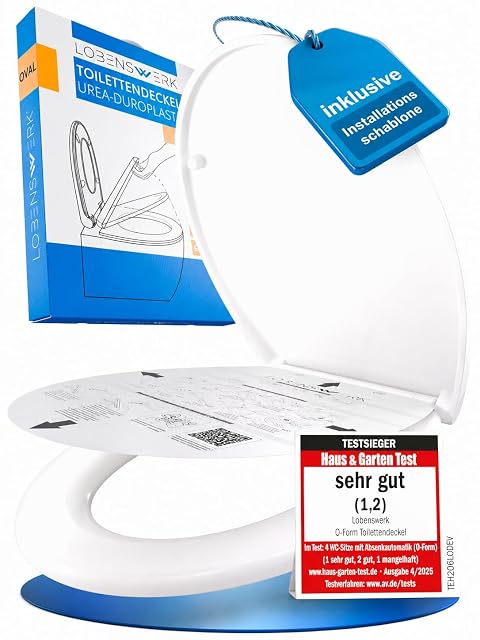
Toilet seat · urea duroplast 2.0, antibacterial and UV-resistant · 25° fast-close · two mounting systems · quick-release · 150 kg to DIN 19516 · 120 000 cycles
A seat that publishes a soft-close life of 120 000 cycles — eight times what its nearest rival states — with a template, a video and two mounting systems.
Best for: A busy household where the damper will be worked hard, and a pan whose fixing type is not yet known.