It treats limescale. It is not a health device. · review
Wiltec SOFT-C1 ion-exchange softener, 500 l/h, 10 kg brine tank review
An entry-level ion-exchange softener that publishes its flow and its operating pressure — and makes a claim about health that this page does not repeat.
The bottom line A working softener with two useful published figures and none of the ones that size it. Read its health claim as the maker's, not as a finding.
What you are getting
An ion-exchange water softening system with a maximum flow of 500 l/h, an optimal operating pressure of 1.5 to 5 bar, a brine tank holding 10 kg of softening salt, automatic regeneration and a display for setting the incoming water hardness.
The two figures worth having
500 l/h maximum flow. That is what decides whether the unit can supply a whole house or should serve one line. A shower alone can draw 9 to 12 l/min — around 700 l/h — so this is a unit for a small household or a single appliance, not a family bathroom running at full flow.
1.5 to 5 bar. The pressure it wants. Below the range it will not work properly; above it, it should not be fitted without a reducer.
What is missing, and it is what sizes a softener
Resin volume and capacity between regenerations. Those two, together with your water hardness, are what tell you how often the unit regenerates and how much salt it will get through in a year.
The softener beside this one in this hub publishes a capacity with the hardness it was measured at. This one publishes neither.
The claim this page will not repeat
The maker states that soft water is “healthier to drink and to shower in”.
That is the manufacturer’s conclusion. Ion exchange replaces calcium and magnesium with sodium — a change in what is dissolved in the water, and a question for a water authority or a doctor rather than a review site.
What a softener demonstrably does is stop limescale forming in your kettle, your boiler and your shower head. That is the reason to buy one, and it is enough.
Availability
On sale from 310 € to 327 € on the German, French, Italian and Spanish Amazon stores at the time of checking.
Listed but with no offer on the British Amazon store — the reference exists there and nobody is currently selling it.
Not found on the American Amazon store, where the buy link falls back to a local search rather than to a page that does not exist.
Prices and availability are what Keepa reported on the date this page was updated; both move.
Prices quoted in this text were read on 5 September 2026. The live price is at the top of the page.
What we like, and what we don't
Strengths
Publishes a maximum flow of 500 l/h AND an operating pressure range of 1.5 to 5 bar
The incoming water hardness is set on a display, so the unit is matched to your supply rather than guessed at
Automatic regeneration from a 10 kg salt reserve, with no manual cycle to remember
Compromises
No resin volume and no capacity between regenerations, which are the two figures that size a softener
No connection size and no footprint, so neither the plumbing nor the cupboard can be planned
The maker states that softened water is healthier to drink and shower in — a claim this page reports and does not repeat
Specifications
Resin volume
Not stated by the maker
Stated capacity between regenerations
Not stated by the maker
Regeneration type
Automatic, by ion exchange from a salt reserve — stated
Connection size
Not stated by the maker
Stated salt consumption
Not stated — the brine tank is stated to hold 10 kg of softening salt
Footprint
Not stated by the maker
Amazon reference
B07ZJ88895 (same reference on 5 Amazon marketplaces)
EAN
4251548120088
Questions people actually ask
What does an ion-exchange softener actually do?
It passes water through a resin that swaps calcium and magnesium ions for sodium ions. The result is water that does not deposit limescale in kettles, boilers and shower heads. That is the effect it is built for, and it is measurable.
Is softened water healthier?
The maker states that it is. This site does not repeat that: softening exchanges calcium and magnesium for sodium, and what that means for anyone drinking it is a question for a water authority or a doctor, not a review site. What a softener demonstrably does is reduce limescale.
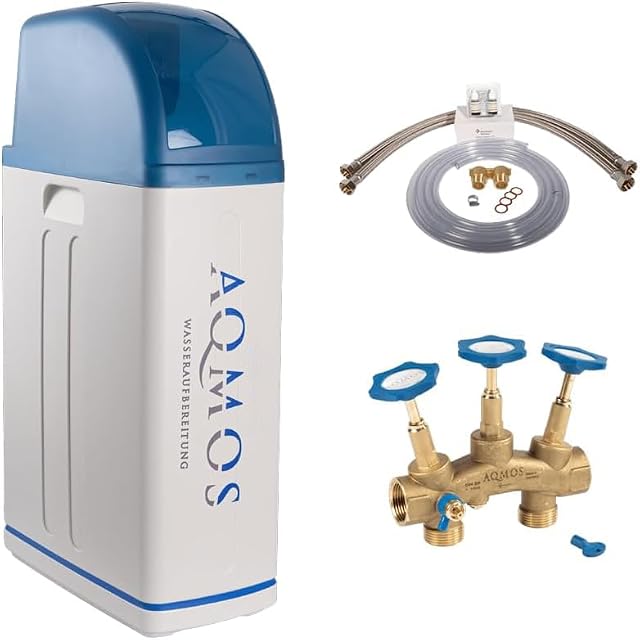
Water softener · up to 4 800 litres per regeneration at 10 °dH — stated with its reference hardness · BNT 1650 metered valve · regenerates at 02:00 in about 30 minutes · 1 in connection set and mounting block supplied
The only softener in this catalogue that publishes a capacity WITH the water hardness it applies at — 4 800 litres per cycle at 10 °dH.
Best for: A household of up to five in a hard-water area, where the unit should size itself to actual use rather than a clock.
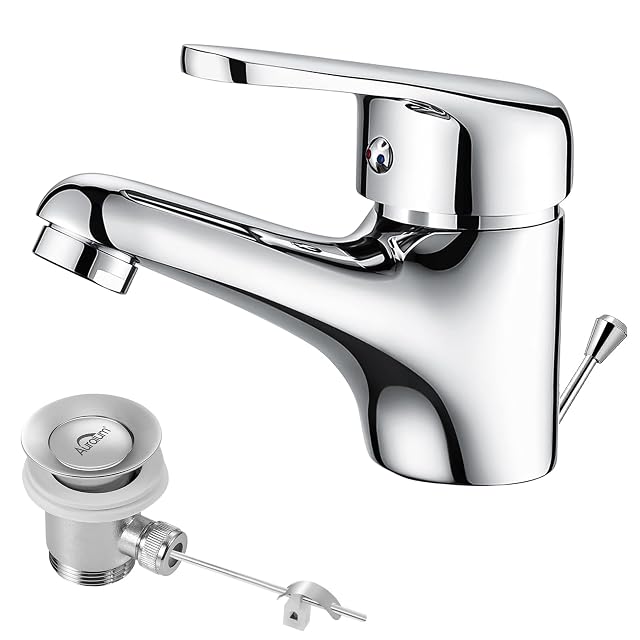
A basin mixer supplied with a solid brass rod waste and a cartridge the maker states has passed 500 000 cycles — the tap on this page that arrives most complete.
Best for: Replacing a tap and a tired waste at the same time, on a basin that has an overflow.
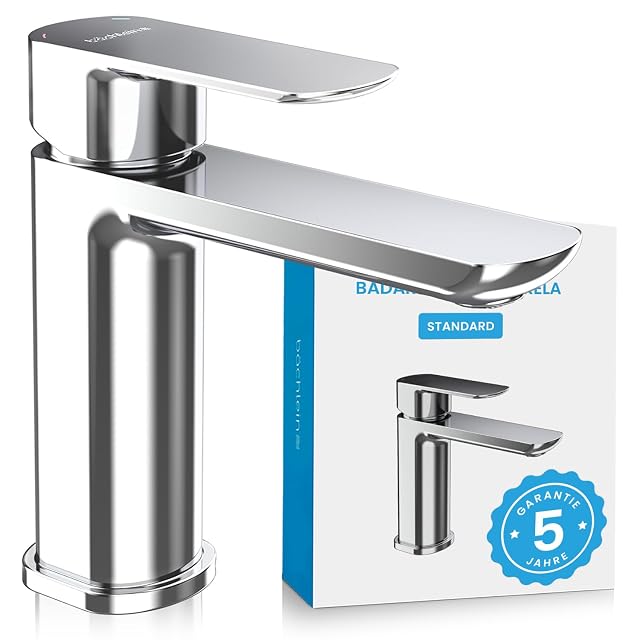
Basin mixer · ceramic cartridge · replaceable aerator · two DVGW-tested 50 cm G3/8 hoses · 5-year warranty stated
A chrome basin mixer sold as a complete, tested set: a ceramic cartridge, a replaceable aerator, two certified 50 cm hoses and a five-year manufacturer warranty.
Best for: A shallow inset basin where a flat spout suits, and where certified hoses and a long warranty are worth the premium.