Skip to content

Stopping a drain smell for good

Sewer smell in a bathroom almost always comes through a drain, not a pipe, and almost always because the water that should seal the trap is gone, short or bypassed. Find the drain first, then fix the part. Every product below was sold on Amazon.com on October 29, 2026.

Find the drain that smells — kneel and sniff at each one — then fix the part that lets the gas through. Prices are Amazon.com, read on October 29, 2026.

1. A trap that leaks or has cracked

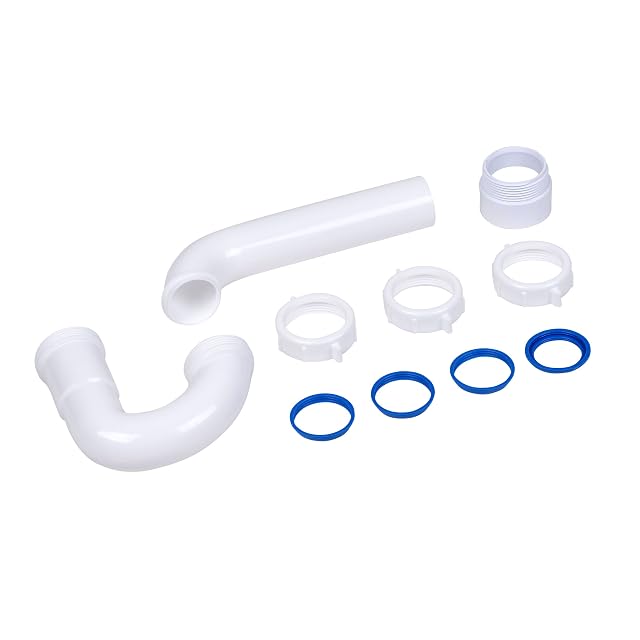
A trap that drips at its nuts or has cracked loses its seal slowly. The Dearborn 1-1/2 inch P-trap is a plain PVC trap with a reversible J-bend and hand-tightened nuts, at about $9. Under a bathroom sink with a 1-1/4 inch tailpiece, check the reducing washer; under a kitchen sink, 1-1/2 inch is standard.

2. A trap that does not line up

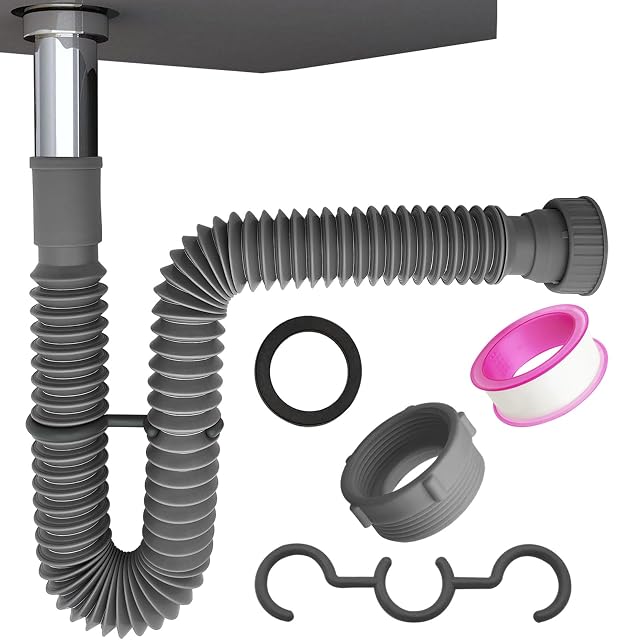
When the drain in the wall and the sink’s tailpiece do not meet, people force a rigid trap and it leaks. The TGEOND flexible trap bridges the offset for about $14. Use it where the pipework really is misaligned; where it lines up, a rigid P-trap holds its seal better.

3. A sink drain that lets gas past the stopper

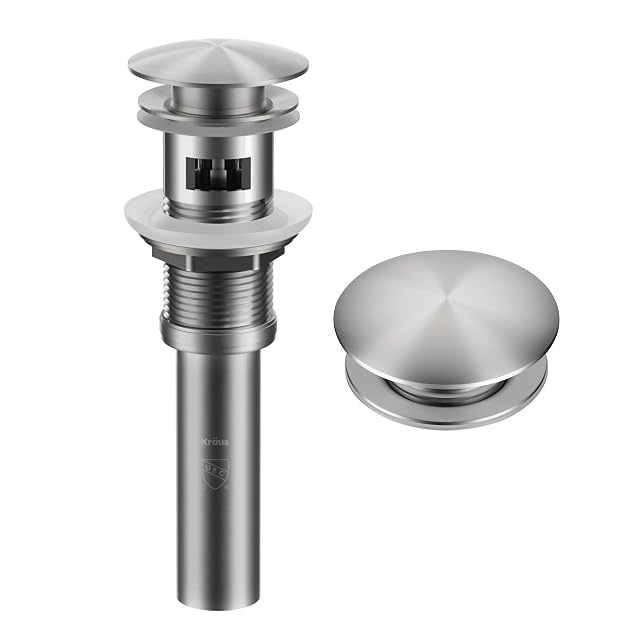
A worn pop-up drain can leak at its gasket, and the overflow channel behind the bowl collects grime that smells. The KRAUS pop-up drain with overflow publishes its dimensions and gaskets, with a one-year warranty, at about $35.

4. A shower drain, if you are rebuilding

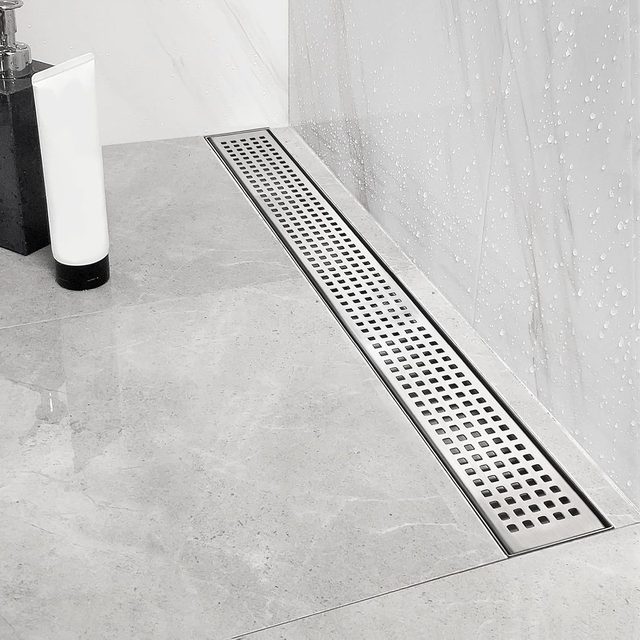
In a new or rebuilt shower, a linear drain with a strainer keeps hair out of the trap below. The Neodrain 24-inch drain is cUPC listed with a hair strainer and a 2-inch outlet, at about $52; the trap itself stays in the drain line beneath the floor.

What fixes it for nothing

Running water into every drain once a week. In most bathrooms that smell with no leak, that is the whole answer.

Which fitting does your bathroom take?

The smell is constant
A dry or missing trap is the most likely cause.
It comes and goes
It often follows the wind or a nearby flush, which points to venting.
It is worse after a shower
The trap may be siphoning, which is a plumbing question.
The room is rarely used
The trap has probably evaporated dry.

Picking by the fitting you need

Unused rooms

Where evaporation empties traps and lets drain air straight into the room.

Shower and tub drains

Where hair and soap build a smelling deposit that no amount of air freshener touches.

Washing machine connections

Where an improperly trapped connection lets smells back constantly.

Persistent smells

Where venting or a defective seal is the cause and the answer is not a product.

What is worth checking in a fitting

Whether the trap holds water
The water seal is the whole defense. A dry trap is an open pipe into the room.
Build-up in the drain
Hair and soap create a smelling layer inside the pipe. Cleaning it is unpleasant and effective.
Frequency of use
A shower used monthly has an empty trap most of the time. Running the water refills it.
Siphoning
If a trap empties when another fitting drains, that is a venting problem and needs proper attention.
The seal at the fitting
Where a shower pan or bath meets its drain, a failed seal lets smell and water past.

Which figure for which bathroom

The patternThe likely causeThe fix
Room rarely usedTrap evaporatedRun the water
Worse after showeringBuild-up in the drainClean the trap
Comes and goesVentingNeeds proper attention
Constant and strongMissing or failed sealInspect the fitting

What people get wrong here

Masking it with air freshener
It hides a signal that something is open to the drain. The cause is always worth finding.
Pouring chemicals down repeatedly
It rarely addresses a dry trap or a venting fault, and some products damage pipework and seals.
Assuming it is the toilet
Shower and tub drains are more often the source, and washing machine connections almost as often.
Ignoring a smell that comes and goes
That pattern often points to venting, which is a genuine plumbing issue rather than a cleaning one.

By who is fitting it

The rarely used bathroom
Just needs the water running periodically to keep traps full.
The family shower
Needs the drain cleaning out, which is unpleasant and completely effective.
The persistent case
Points to venting or a failed seal, and is worth having looked at properly.

Cleaning, scale and working life

Drain smells are almost always a maintenance story rather than a plumbing fault. Traps evaporate when nobody runs the water, drains silt up with hair and soap, and both are gradual enough that the smell seems to appear from nowhere.

  • Run every faucet and shower periodically, especially in rooms you rarely use.
  • Clean shower and tub drains before they smell, not after.
  • Check that traps are correctly fitted and holding water.
  • Avoid harsh chemical drain products, which can damage seals and pipework.

Safety

Drain gases and chemicals.

  • Persistent drain smells should be investigated rather than tolerated.
  • Never mix drain products; some combinations are dangerous.
  • Ventilate while working on any drain fitting.
  • Wear gloves when cleaning drains and dispose of debris properly.

Prices quoted in this text were read on October 29, 2026. The live price is at the top of the page.

What we chose, and on what grounds

  1. Oatey Dearborn 1-1/2 in P-trap

    1-1/2 in tubular P-trap with a threaded PVC adapter and a reversible J-bend, bagged with a True Blue premium washer; the first bullet states it is made of PVC for easier cutting and glue applications while the fifth states it is available in white or black polypropylene, and the description states the traps are manufactured with a PVC or ABS plastic adapter and True Blue premium washers for superior sealing in tubular drain applications; super nuts with full sized wings and longer threads, and a marvel connector included

    A 1-1/2 in tubular P-trap with a reversible J-bend, hand-tightenable nuts and a premium washer.

    Best for: A 1-1/2 inch drain that needs a plain, well-made P-trap and nothing clever

    ≈ $9
  2. TGEOND flexible expandable P-trap

    Flexible expandable bathroom P trap with a 1-1/4 to 1-1/2 in sink drain adapter included, with rubber tips and a nut adapter gripping the average drain pipe spout, adjustable in length from 13.78 in (350 mm) to 35.43 in (900 mm); the inner diameter of the top nut is 1-1/2 in (45 mm), the inner diameter of the bottom is 1.2 in (30 mm) and the 1-1/4 in nut adapter inner diameter is 1.5 in (39 mm); an accordion design in premium plastic with high-elasticity silicone rubber connections requiring no fasteners, for kitchen sinks, bathrooms, spa baths, vanities, pedestal sinks and RVs; the maker notes the adapter supplied may be white or gray

    A flexible expandable sink trap adjustable from 13.78 to 35.43 inches, with a 1-1/4 to 1-1/2 adapter.

    Best for: A drain that does not line up and cannot be moved — and nothing else

    ≈ $14

  3. Neodrain 24 in linear shower drain

    24 × 2.75 in channel · 2 in outlet · 50.5 L/min (13.3 gpm) stated · AISI 304 · cUPC and WaterMark · Quadrato grate · leveling feet · drain base sold separately

    A 24-inch AISI 304 linear drain, cUPC and WaterMark certified, with a stated 50.5 L/min flow, a 2-inch outlet for a US no-hub drain base sold separately.

    Best for: A curbless or walk-in shower being built on a standard 2-inch US drain line

    ≈ $52

The questions we get

How deep should the water seal be?

US plumbing codes require a trap seal of at least 2 inches and no more than 4. A trap that holds less, or one that loses its water, lets sewer gas through.

Why does a rarely used drain smell?

The seal evaporates. A guest bathroom sink, a shower that is never used or a floor drain can dry out in a few weeks. Run water into it every week, and the smell goes.

Can a trap be siphoned dry?

Yes, when the drain is not vented properly: a large slug of water rushing down pulls the seal out behind it, and the gurgle you hear is the giveaway. That is a venting problem for a plumber, not a part on this list.

What about an S-trap?

An S-trap is a P-trap whose outlet turns down instead of into the wall. It self-siphons easily and most current US codes no longer allow it for new work. If yours is one, the fix is a P-trap into a vented wall drain.

Do drain cleaners help?

For a slow drain, sometimes; for a smell, rarely. The smell is almost always the seal, not a clog. Clean the stopper and the overflow channel before buying chemicals.

Each fitting, and the bathroom it belongs in

Oatey Dearborn P9703WBG · $9

Right for: A 1-1/2 inch drain that needs a plain, well-made P-trap and nothing clever

Its best quality: Nuts with full-sized wings, which means it tightens by hand — and under a sink there is rarely room to swing a wrench

Its main catch: Bullet one says PVC and mentions glue; bullet five says polypropylene, which cannot be solvent-glued at all

Read the full review: Oatey Dearborn P9703WBG →

TGEOND S-Trap Gray 09 · $14

Right for: A drain that does not line up and cannot be moved — and nothing else

Its best quality: Adjustable from 13.78 to 35.43 inches, which is the only thing on this shelf that fixes a drain stub in the wrong place

Its main catch: The corrugations that make it flexible are what catch debris: a ribbed trap is the classic cause of a slow, smelly sink

Read the full review: TGEOND S-Trap Gray 09 →

Kraus PU-11SFS · $35

Right for: A new sink with an overflow, or a drain body that has corroded through — the complete, fully specified answer

Its best quality: Publishes every dimension that matters: overall length, cap diameter, tailpiece size and the drain opening it fits

Its main catch: For sinks WITH an overflow only: fitted to a sink without one it will leak into the cabinet

Read the full review: Kraus PU-11SFS →

Neodrain ZA3-24-G03 · $52

Right for: A curbless or walk-in shower being built on a standard 2-inch US drain line

Its best quality: cUPC certified, the listing an inspector looks for, with a drainage rate stated in liters per minute

Its main catch: The 2-inch drain base it sits on is sold separately

Read the full review: Neodrain ZA3-24-G03 →

What changes as the price goes up

The one-line version

Comparisons that help here

Side-by-side pieces already published on two fittings from this guide or this aisle.

What this ranking rests on

The fittings listed come from this catalog of this site. Specifications are the published ones, from the maker and from the Amazon page; prices are what Keepa reported on the date below, and both move over time. The order uses declared specifications, the balance between stated strengths and stated limits, and price. No fitting here has been installed or tried by us, and the page does not claim it was.

Last checked on