What the maker puts in writing
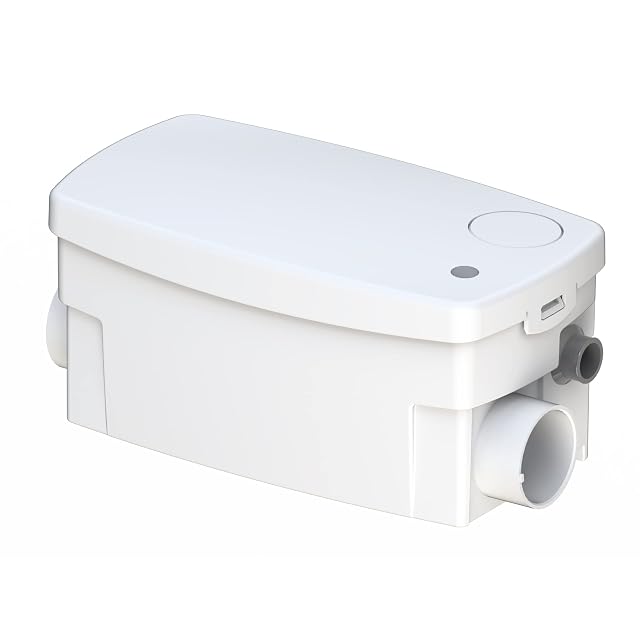
- “This macerator pump features a water-electric separation design to keep water away from the motor, a bottom blade to reduce hair clogs, and a built-in check valve that stops wastewater backflow”
- “With an 800W motor and a max flow rate of 200 LPM, this upflush toilet pump handles simultaneous drainage from washing machines, bathtubs, and sinks. With a 32.8 ft / 10 m max lift, it easily pumps wastewater to main drain line”
- Compact for tight spaces, for sinks, showers, kitchens and laundry rooms
- “Crafted with a pure copper motor, this laundry sink drain pump runs cooler for extended service life. The corrosion-resistant PP housing resists warping and cracking”
- “The breathable discharge valve helps block unpleasant smells and keeps indoor air fresh”
The check valve
This is the feature that justifies this page, and four of the six pumps on this shelf do not have it.
A macerator pumps up. When it switches off, the water standing in the discharge pipe — perhaps ten feet of it — has nowhere to go but back down into the tank.
Without a check valve, that happens every cycle. The pump grinds and lifts the same waste again. It runs far more often than it needs to. And the tank is left holding more residue between uses, which is where the smell comes from that people blame on the product.
A check valve holds the column up.
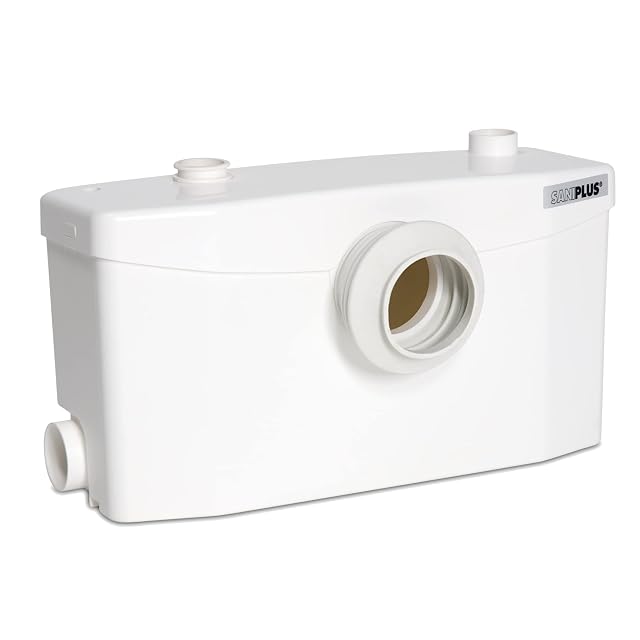
Two listings on this shelf publish one: this, and the $403.92 Saniflo Sanishower.
And a blade at the bottom, for hair
The failure that actually stops a shower-fed macerator is not solids. It is a felted mat of hair that wraps the shaft and stalls the impeller.
A bottom blade to reduce hair clogs.
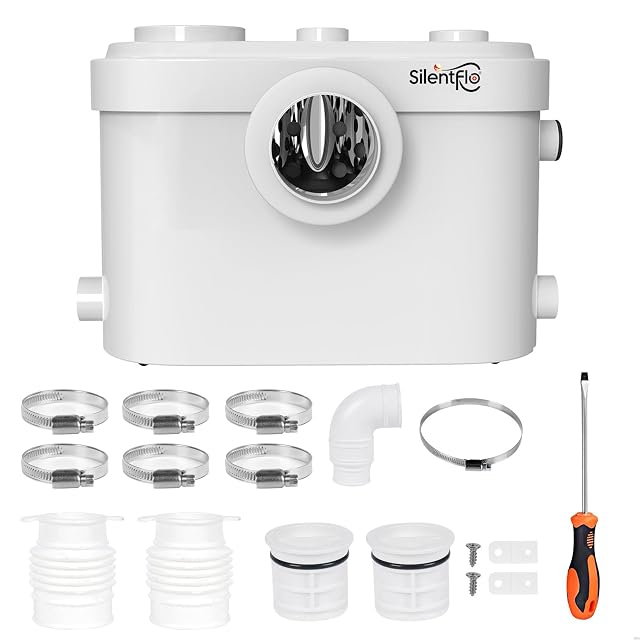
No other listing on this shelf names the problem. SILENTFLO addresses something adjacent with a “360° shredding structure” for fibrous waste; Saniflo offers hardened stainless blades.
A macerator fed by a shower sees hair every day and solids occasionally. This is the right thing to have designed for.
Water away from the electrics
A water-electric separation design to keep water away from the motor.
Which is a different approach from the maker’s own 500 W and 900 W pumps, where the answer is an IPX8 oil-filled motor — sealed and flooded with oil so water cannot get in.
Both are legitimate. Keeping the water away is arguably better than sealing the motor against it.
And a PP housing — polypropylene, which does not corrode and does not go brittle the way cheaper plastics do in a warm damp basement.
The best watts per dollar here
$0.152 a watt on October 29, 2026, against $0.144 for the maker’s 900 W, $0.220 for its 500 W and $0.332 for the SILENTFLO. The two Saniflos publish no motor power at all.
And the highest published flow of the three VEVORs: 52.8 gpm (200 LPM).
Why the 800 W moves more water than the 900 W
Because it lifts it less far, and VEVOR’s figures are honest about the trade.
Hydraulic work is flow times head. 800 W: 52.8 gpm (200 LPM) at 33 ft (10 m) = 2,000. 900 W: 47.6 gpm (180 LPM) at 39 ft (12 m) = 2,160. The ratio between those, 1.08, is close to the ratio of the motors, 1.125.
So these numbers come from a real pump curve, not from a brochure. That is unusual enough to say plainly.
Long and flat: this pump. Steep climb: the 900 W.
Two things not on this page
No water temperature — which is odd, because VEVOR publishes 75 °C / 167 °F on both its other pumps here, and it is the figure that says whether a washing machine can discharge into it. The bullets mention washing machines without a figure.
No horizontal run. As on both VEVOR siblings, the lift is published and the run is not — and the two pumps on this shelf that give both show that one foot of rise costs about ten feet of run.
No certification either, where the Saniplus publishes CSA and IAPMO.
Availability
Available at around $121.90 on Amazon.com when we checked on October 29, 2026, for delivery to a US address.
Stock and prices on Amazon.com move without notice; the button above opens the live listing.
Prices quoted in this text were read on October 29, 2026. The live price is at the top of the page.